
History
at Bedford Drive Primary School
“History is not a burden on the memory but an illumination of the soul.”
The school follow the National Curriculum for History as defined by the Department for Education. The National Curriculum for History aims to ensure that all pupils:
know and understand the history of these islands as a coherent, chronological narrative, from the earliest times to the present day: how people’s lives have shaped this nation and how Britain has influenced and been influenced by the wider world
know and understand significant aspects of the history of the wider world: the nature of ancient civilisations; the expansion and dissolution of empires; characteristic features of past non-European societies; achievements and follies of mankind
gain and deploy a historically grounded understanding of abstract terms such as ‘empire’, ‘civilisation’, ‘parliament’ and ‘peasantry’
understand historical concepts such as continuity and change, cause and consequence, similarity, difference and significance, and use them to make connections, draw contrasts, analyse trends, frame historically-valid questions and create their own structured accounts, including written narratives and analyses
understand the methods of historical enquiry, including how evidence is used rigorously to make historical claims, and discern how and why contrasting arguments and interpretations of the past have been constructed
gain historical perspective by placing their growing knowledge into different contexts, understanding the connections between local, regional, national and international history; between cultural, economic, military, political, religious and social history; and between short- and long-term timescales.
Being a historian at Bedford Drive means:
Being curious about the past by asking thoughtful questions about people, places, events and ways of life.
Developing chronological understanding by placing events and periods in order and understanding how they fit within a wider historical timeline.
Building secure historical knowledge by learning about significant events and individuals from local, British and world history.
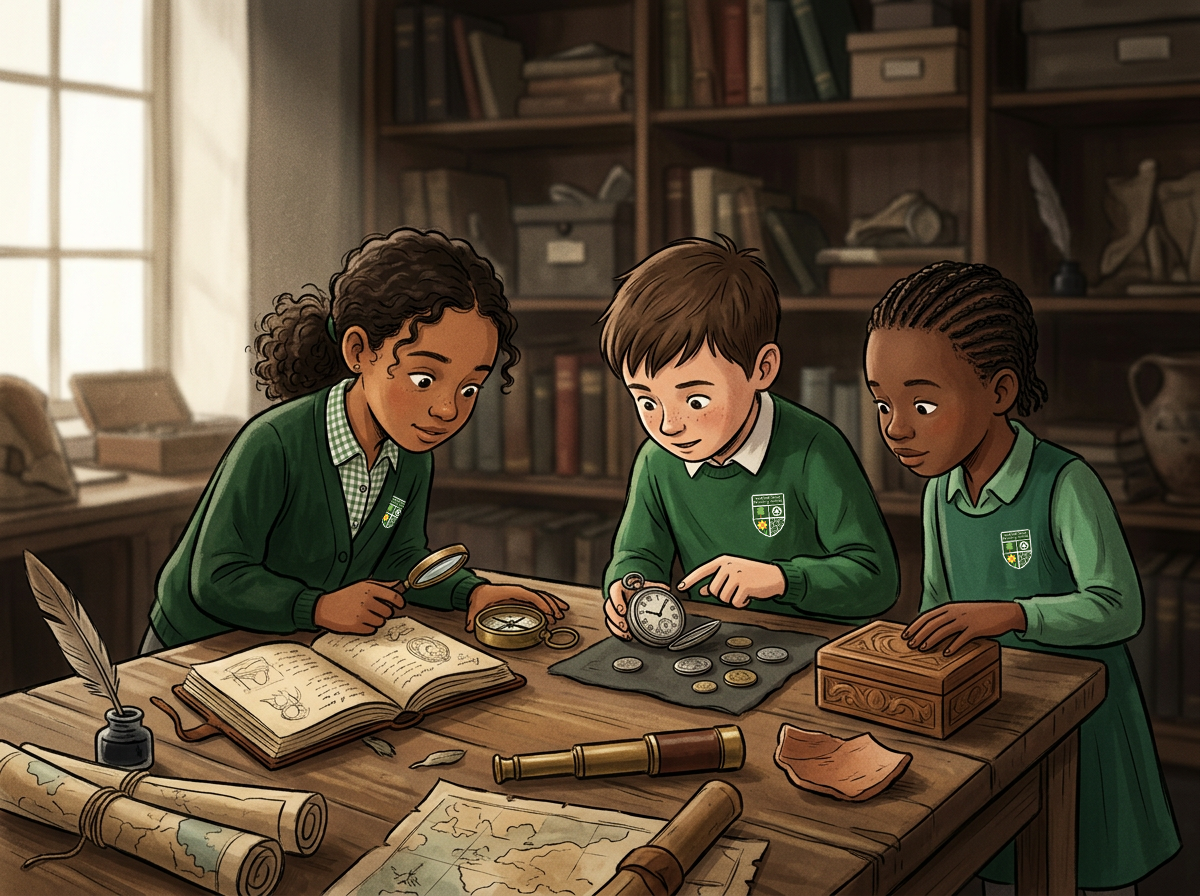
Exploring history through hands-on experiences by handling and examining appropriate artefacts and considering what they can reveal about life in the past.
Using a range of historical sources including artefacts, photographs, documents, maps, buildings and eyewitness accounts to investigate the past.
Thinking critically about evidence by considering where sources came from, what they tell us and whether different sources present different versions of the past.
Recognising connections and contrasts by exploring continuity and change, cause and consequence, similarity and difference, and historical significance.
Using historical vocabulary confidently when asking questions, discussing evidence and explaining ideas about the past.
Bringing history to life through carefully planned visits, visitors, workshops and immersive experiences that enrich classroom learning.
Understanding our place in history by exploring the heritage of our local area and making connections between local, national and global events.
Communicating historical understanding by organising evidence and presenting ideas clearly through discussion, writing and creative outcomes.
Recognising that interpretations may differ and using evidence to form and justify our own conclusions about the past.